Mariana Tejado, leader of Environmental Law and Public Policies in USA Vitalis, has warned that Mexico could breach the Paris Agreement as well as national legislation and stop the progress that has been made in reducing greenhouse gas emissions.
(Vitalis Comunication)
Ivonne M. Rincón Moreno
Environmental organizations are on alert regarding the proposed reform of articles 25, 27, and 28 of Mexico’s Constitution that seeks to nationalize the electricity industry. Mariana Tejado, leader of Environmental Law and Public Policies in USA Vitalis, warns that in this matter the main concern is the environmental and social impact since it has been shown that the Mexican government does not have the necessary capacity to boost on its own the use of renewable energies.
“There is great concern because if this reform takes place, the Paris Agreement could be breached, on the one hand, while it would also imply a setback in environmental protection since many of the Federal Electricity Commission’s facilities are old and polluting. Even if they were able to produce electricity they would be a problem,” highlighted the environmental leader.
The Paris Agreement was signed on December 12, 2015, at the COP21 in Paris, and in it the parties reached a historical agreement to combat global warming and to boost the necessary actions to reduce greenhouse gas emissions. Therefore, violating this agreement would produce a negative impact on global environmental policies.
Tejado further warns that this constitutional reform puts in jeopardy the achievement of the reduction of greenhouse gas emission goals and the development of clean energy. Added to this is the violation of Mexicans’ human rights since the right to a healthy environment is universal. “This proposed reform would violate other Mexican laws like the General Law of Climate Change and the Energy Transition Law,” she says.
The Vitalis USA leader emphasized that this problem concerns not only Mexico but also other nations —including the United States — which will be affected by this decision. “We all are in the same boat with the climate issue and we must work globally because the pandemic has confirmed to us that the butterfly effect is real,” Tejado said. “We are all interconnected, and for that reason we in the United States view this policy with concern that it will imply a setback for the use of renewable and clean energy.”
Tejado went on to say, “By increasing greenhouse gas emissions that are produced by the use of fossil fuel, there is a greater emission of pollutants. The point is that it goes from being a local problem to a global one. Mexico must make a consensual analysis on the constitutional reform that not only addresses energy sovereignty but also evaluates the damages and threats that it would represent. It is important that the countries looking for an energy transition, including the United States, are aware of the development of this proposal because this is an issue of energy transition and global damage.
She added, “Technically what the reform says is that the Federal Electricity Commission will maintain control of the operation and generation of 56% of the energy while the rest could be in the hands of private companies, but this will be decided by the authority. As a result, the monopoly of the commission will return, and the commission itself will decide what percentage will be open to private capital. Furthermore, it will make that decision when it wants to and how it wants to.”
The Mexican lawyer and member of USA Vitalis explains that in 2013 Mexico opened the door to private capital and thanks to that decision, investment in green technologies and renewable energy projects increased, thus avoiding the emission of pollutants, and giving hope that the established goals of emission reduction could possibly be fulfilled in time. But if this reform passes, there is no way to reach the 2030 and 2050 goals, and the health problems will increase.
“We are not minimizing the issue of sovereignty or energy security; those can be adequately protected and regulated without sacrificing the progress in clean energy that Mexico needs. I believe that the United States needs to turn to Mexico because it is its neighbor and commercial partner and both nations need to look to the future under an environmental protection scheme.”
Tejado concluded, “All the climate reports agree that if the countries continue without committing themselves, the change in the temperature will be much greater and more accelerated.”
]]>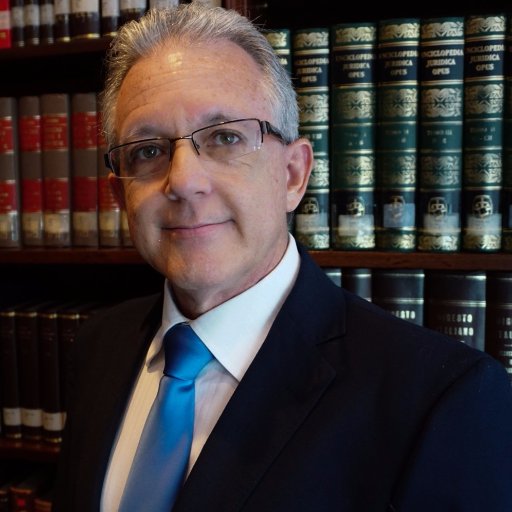 Por: Alberto Blanco-Uribe Quintero (*) @albertobuq
Cuando la Declaración de Río sobre el Medio Ambiente y el Desarrollo nos habla de “autoridades nacionales”[1], se refiere a todos los niveles territoriales del poder, cualquiera sea la estructura organizativa de cada Estado, pudiendo tratarse de entes centrales como parlamentos o ministerios, pero también de figuras descentralizadas federadas, autonómicas, provinciales, municipales, etc.
De este modo, la aplicación del principio «quien contamina, paga», al buscar la internalización del coste ambiental dentro de la contabilidad del operador económico, para hacerlo responder del daño ambiental derivado de su actividad, es obligación de toda autoridad pública, en el marco de la respectiva normativa.
En este orden de ideas, tenemos que la novedosa Ley Foral 14/2018 de 18 de junio, de Residuos y su Fiscalidad, dictada por el Parlamento de la Comunidad Foral de Navarra, en España, establece el Impuesto sobre la Eliminación en Vertedero y la Incineración de Residuos, como tributo indirecto, real y extrafiscal, siendo su finalidad fomentar la prevención, la reutilización y el reciclado, y desincentivar las acciones que constituyen su hecho imponible: la eliminación controlada en vertedero público o privado y la incineración en instalaciones al efecto.
La ley consagra supuestos excepcionales de no sujeción y de exención del tributo.
Los contribuyentes son las entidades locales y las personas naturales y otras personas jurídicas, cuando entreguen directa o indirectamente los residuos para su eliminación en vertedero o para su incineración.
El devengo o causación del tributo sucede en el momento en que se produzca la eliminación mediante el depósito o la entrada en la instalación de incineración.
La base imponible viene dada por las toneladas de residuos por vez, y será por estimación directa a través de sistemas controlados de pesaje, y si ello no es posible se aplicará la estimación indirecta conforme con la Ley Foral 13/2000, de 14 de diciembre, General Tributaria.
Para la estimación indirecta se usará cualquier dato, circunstancia o antecedente de los que pueda deducirse el peso de los residuos, tales como el volumen, la densidad o la composición, y en especial los datos económicos y del proceso productivo.
La cuota tributaria prorrateable es de 20 euros por tonelada de residuos domésticos y comerciales, o por tonelada de residuos no peligrosos, industriales o comerciales; de 3 euros por tonelada de residuos de construcción y demolición no peligrosos; 1 euro por tonelada de materiales naturales excavados (tierras y piedras) y residuos industriales inertes; 20 euros por tonelada de residuos para incineración; y, 5 euros por tonelada de residuos industriales minerales no peligrosos de baja lixiviación.
El tributo se satisface por el mecanismo de autoliquidación.
Finalmente, la recaudación de este impuesto, así como el ingreso por multas por incumplimiento de deberes legales en materia de gestión de residuos, se destinan al Fondo de Residuos.
Se trata de un patrimonio separado, administrado por el departamento con competencia en materia ambiental, y está afectado al financiamiento de medidas que persigan mitigar impactos adversos sobre la salud humana y el ambiente, asociados a la generación y gestión de residuos.
(*) Abogado, Profesor Universitario. Postgrado Derecho Ambiental, Univ. de Estrasburgo, Francia. Postgrado Derechos Humanos, Univ. de Castilla-La Mancha, España. Asesor Internacional de VITALIS basado en Francia. www.albertoblancouribe.com
[1] Principio 16: “Las autoridades nacionales deberían procurar fomentar la internalización de los costos ambientales y el uso de instrumentos económicos, teniendo en cuenta el criterio de que el que contamina debe, en PRINCIPIO, cargar con los costos de la contaminación, teniendo debidamente en cuenta el interés público y sin distorsionar el comercio ni las inversiones internacionales” http://www.un.org/spanish/esa/sustdev/agenda21/riodeclaration.htm
]]>